


In a country where nearly half of all treated water never reaches a tap, the conversation about sustainability needs to change. At the Future of Sustainability Conference in Johannesburg last month, business and government leaders gathered to confront an uncomfortable truth: we cannot solve systemic challenges with isolated solutions.
For Nestlé, water security is not an abstract commitment. It is foundational. Our ability to operate, support farmers and serve communities depends on it. Which is why our approach begins where it matters most: optimising irrigation and building trust with municipal officials and community leaders.

The numbers behind the urgency
South Africa loses 47% of its treated water to leaks, theft and inefficiencies. Municipalities report R14.89 billion in annual losses. Upgrading the country's infrastructure requires an estimated R400 billion, a sum neither government nor business can shoulder alone.
By 2030, water scarcity could shave up to 0.44% off national GDP.
These are not just statistics. They represent factories unable to run at full capacity. Farms that cannot irrigate. Communities without clean drinking water. Jobs at risk.
“Water security is a shared responsibility.”
– Conny Sethaelo, Corporate Communication & Public Affairs Director, Nestlé East and Southern Africa Region

What partnership actually looks like
Speaking on a panel about public-private-community partnerships, Conny Sethaelo, Nestlé ESAR's Director of Corporate Affairs, emphasised a principle that often gets lost:
“Water security is a shared responsibility, and progress will come from practical partnerships that bring together business, government and communities to co-create solutions that are both scalable and locally relevant.”
No breakthrough technology. No single hero. Just the hard work of aligning incentives, sharing risk and committing to transparency.
Our water stewardship reflects this.
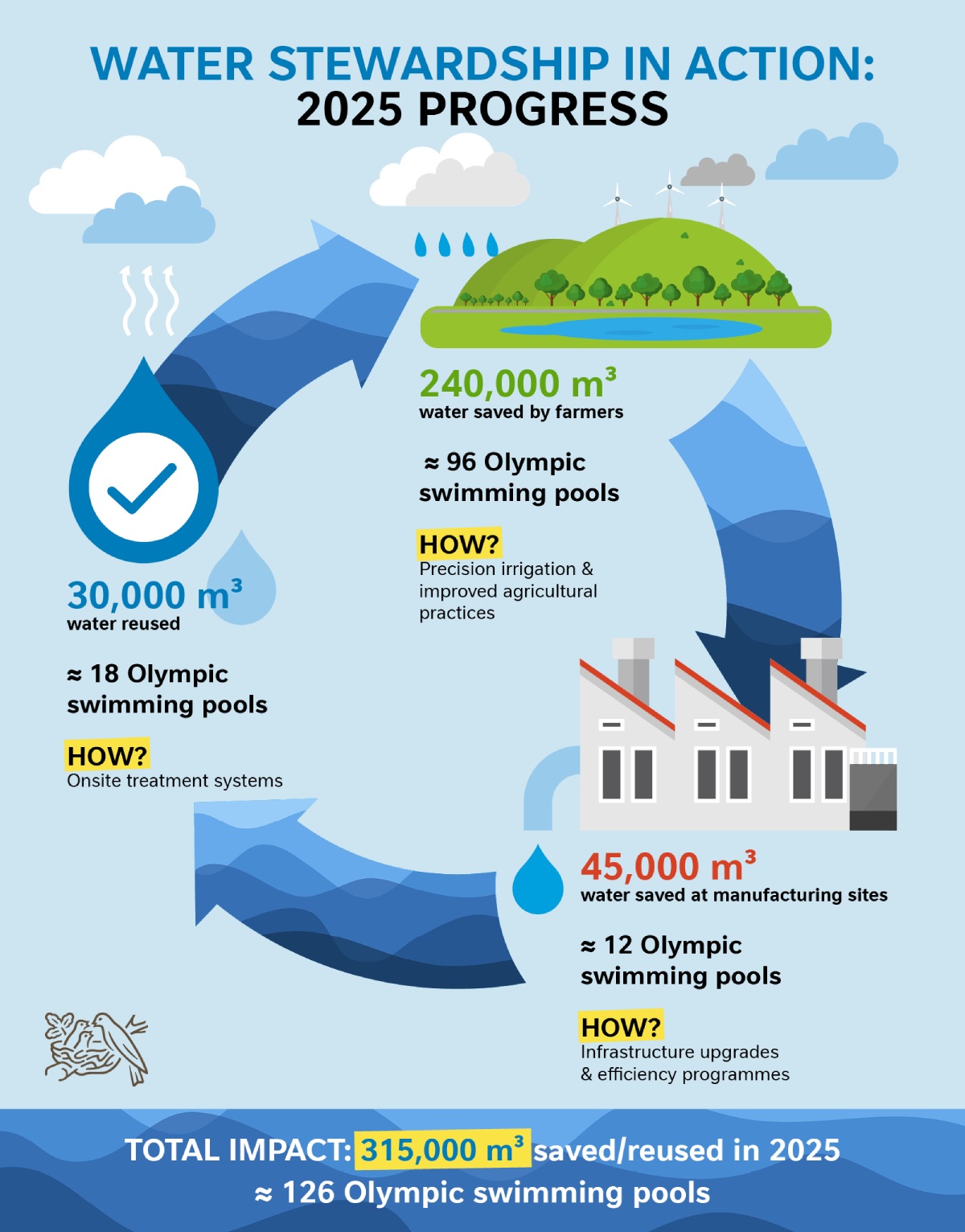
At our Babelegi site, engineering upgrades including reverse osmosis systems now save more than 14,000 cubic metres annually. Behavioural programmes delivered efficiency improvements of up to 8%.
Incremental gains. But they add up. More importantly, they are replicable.
“Partnerships succeed when people trust the process.”
– Conny Sethaelo, Corporate Communication & Public Affairs Director, Nestlé East and Southern Africa Region
Why trust matters more than technology
Technology can solve a water leak. It cannot solve a breakdown in trust.
That requires showing up. Listening. Proving over time that partnerships deliver mutual benefit, not corporate optics.
“Partnerships succeed when people trust the process,” said Conny. “That means being transparent about what works and what does not, inviting communities into the design process, and committing to solutions that reflect local needs, not just corporate priorities.”
This is not always comfortable. It means acknowledging we do not have all the answers. Accepting that progress can be slow and non-linear. But it is the only way to build resilience beyond a single project cycle.
From farms to factories: A systems approach
Water security connects to energy, food and climate resilience. Our work extends across the entire value chain.
At our Harrismith factory, a solar farm with 2,054 panels supplies approximately 30% of the site's electricity, reducing both carbon emissions and vulnerability to grid instability. We are piloting solar-powered groundwater systems and exploring zero-water technologies.
On farms, we work with producers to adopt regenerative agricultural practices that improve soil health, increase water retention and build climate resilience. Globally, Nestlé has committed CHF 1.2 billion to regenerative agriculture, supported by 540 sourcing specialists working directly with farmers on soil, water and biodiversity stewardship.
In South Africa, soil moisture probes help farmers save approximately 975 cubic metres of water per hectare. These interventions respect farmers' existing knowledge while introducing tools that make operations more efficient and climate-resilient.
The unglamourous side of real change
Sustainability can feel like an industry of bold pledges and distant deadlines. We understand the scepticism.
That is why we focus on what can be measured, verified and scaled.
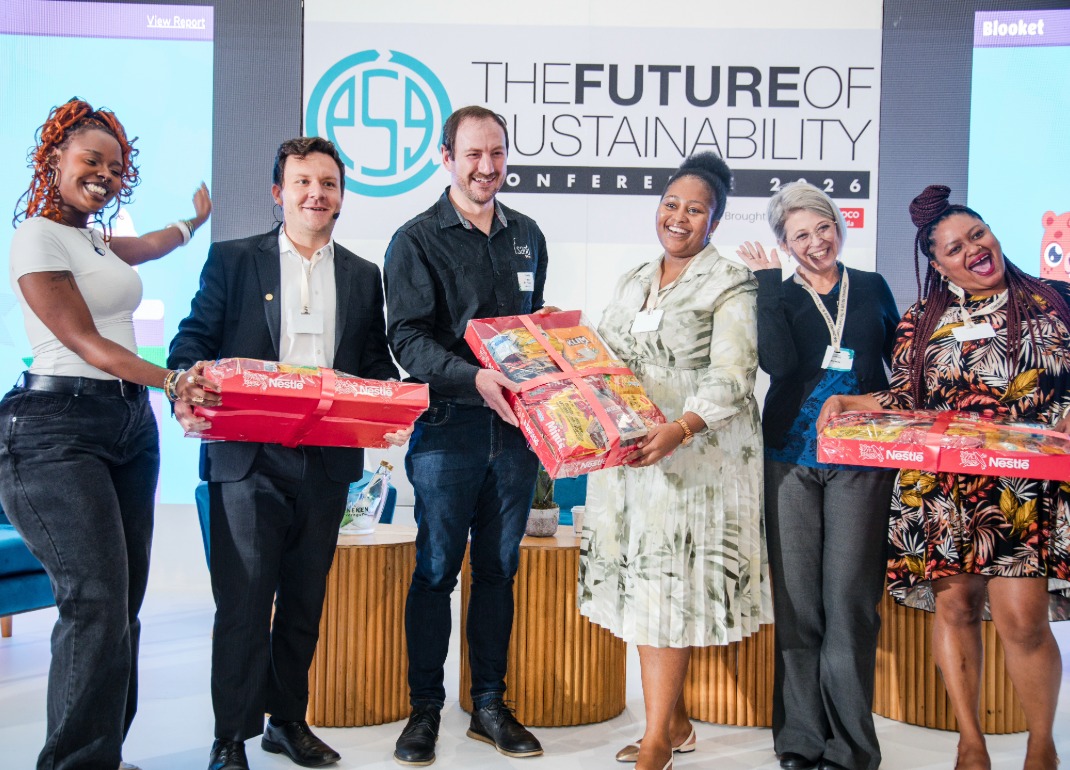
At the conference, our exhibition presented proof points: water saved, systems upgraded, partnerships formed. The message was simple. This is what collaboration looks like when it moves from boardrooms to boreholes.
Transformational change often does not feel transformational in the moment. It feels like fixing a pipe. Training a team. Sitting through another stakeholder meeting.
But multiply those incremental efforts across sites, supply chains and sectors, and they start to shift systems.
What comes next
There is no silver bullet for water security. No single technology, policy or partnership will solve the crisis.
But there is a path forward, and it runs through collaboration.
We will continue investing in water efficiency across our operations. We will deepen partnerships with municipalities, farmers and communities. We will be transparent about progress and setbacks alike.
Because our licence to operate depends not on what we promise, but on what we deliver. And because the communities we serve, the farmers we work with and the country we call home deserve nothing less than our sustained commitment to solutions that work. This is how we create shared value.
Water security is a shared responsibility. The solutions will be too.